Alexa Alice Joubin

critical AI studies

How AI Changes Theatrical Publics

How AI Changes Theatrical Publics

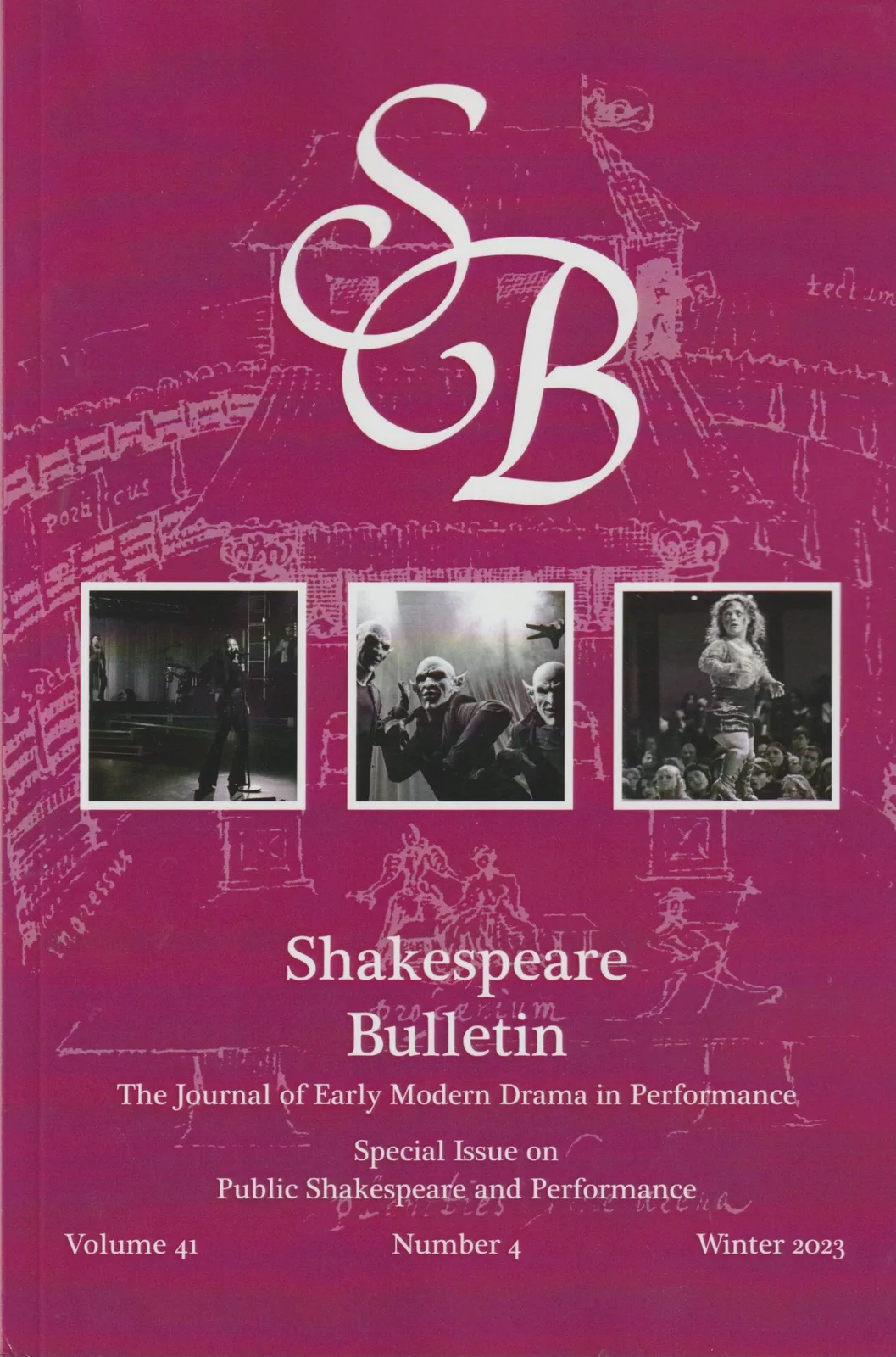
Shakespeare Bulletin 41.4 (Winter 2023): 529-553

When AI goes to theater with humans, it changes the dynamics of the social space. This article examines a case of audiences being asked by organizers to use an AI app on their phones to translate a sign language performance. This study draws on interface theories to analyze the roles of screens in regulating publics’ access to performance, producing new ambient conditions of theatergoing and changing the publics’ relationships to themselves and to performance. AI s creens in All the World’s a Screen, an Irish Sign Language production, served and became co-spectating theatrical publics. Operating both within and beyond the fabula of the performance, screens as anthropomorphic interfaces create multiple theatrical publics through an imperfect spectatorial proxy.

DOIFull TextJournal Website

Enhancing the Trustworthiness of Generative Artificial Intelligence in Responsive Pedagogy in the Context of Humanities Higher Education

General Aspects of Applying Generative AI in Higher Education: Opportunities and Challenges , (Springer Nature, 2024), pp. 207–220 To test the hypothesis of trustworthy AI and to model best practices in education, this discusses a proof-of-concept proprietary AI Teaching Assistant designed by Professor Joubin . The project analyzes what conversational AI tools can realistically accomplish in the humanities higher education context. The study finds two substantive challenges posed by AI: singularity and mistaking synthesis for critical thinking. Joubin offers a solution to each challenge. The project also argues that AI is a ghost and synthetic version of the publics. AI throttles and controls the general public’s access to information.

FULL TEXTBUY